How to Withdraw Cash in South Korea: A Visual Guide to
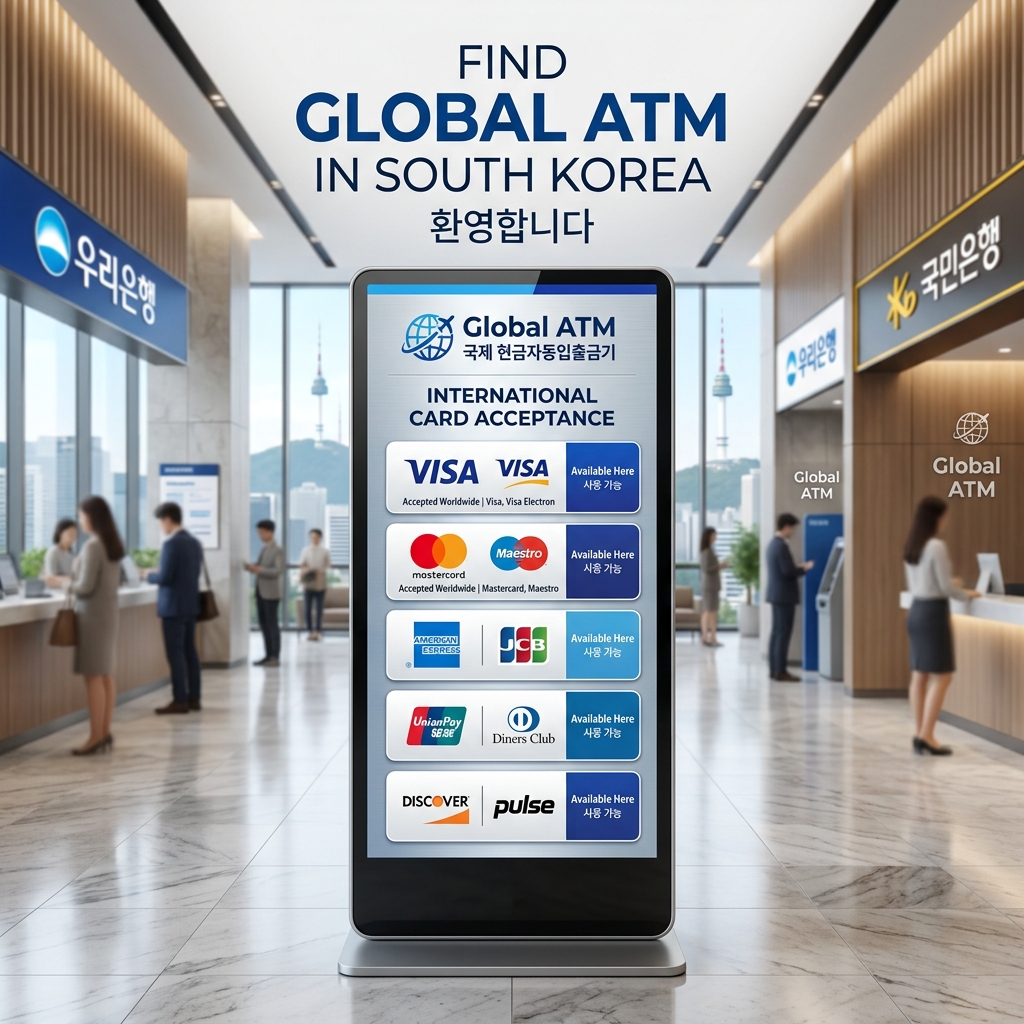
While South Korea’s gridded retail zones accept card transactions seamlessly, keeping physical paper currency inside your travel pouch remains mandatory for specific arrival steps. You will require physical Korean Won bills to reload basic T-Money transit chips at subway kiosks, buy street food at historical markets, and pay for lockers at public train depots.
However, marching up to the very first cash machine you see on a street corner can lead to sudden card rejections and predatory service charges. To protect your travel assets, you must understand how to separate local domestic machines from international-friendly networks.
The Convenience Store ATM Trap: High Fees and Low Limits
The most common financial mistake international tourists execute is utilizing standalone ATM units installed inside convenience store chains like CU, GS25, or 7-Eleven. These independent machines are operated by private third-party billing networks (such as HanNet or Cyber Cash) rather than established commercial banking institutions.
The Flat Processing Fee: These private networks apply a harsh, non-refundable processing fee ranging from 3,500 to 5,000 KRW (~$2.60 to $3.70 USD) per single withdrawal attempt, regardless of your transaction size.
The Low Limit Constraint: They enforce strict transaction limits, frequently blocking you from pulling out more than 100,000 to 300,000 KRW at one time. If you need to pull 600,000 KRW to cover a group tour, you are forced to execute two separate transactions, doubling your processing fees.
Card Ejection Errors: Because these machines lack connection bridges to international banking lines, inserting a US debit card frequently triggers an immediate "Invalid Card" or "Transaction Declined" error layout.
The Visual Solution: Hunting for the 'Global ATM' Branding
To secure clean mid-market exchange rates and low processing fees, you must completely bypass convenience store boxes and walk into the physical lobby of a major local commercial bank. Target established national brands such as KB Star Bank (Kookmin Bank), Shinhan Bank, Hana Bank, or Woori Bank.
When you step inside the automated teller lobby, look closely at the physical plastic frames of the machines. Standard domestic machines are built strictly for local cards. You must look for a machine that features a prominent, highly visible "Global ATM" banner, often accompanied by a blue or silver logo displaying a globe symbol and visible Visa, Mastercard, and JCB decals.
Step-by-Step International Withdrawal Protocol
Once you position yourself in front of a certified Global ATM, execute these precise interface steps to avoid automated conversion errors:
Language Selection: Tap the flashing "English" button on the primary touch screen layout. This automatically switches the system architecture to international banking tracks.
Transaction Type: Select the option labeled "Foreign Card" or "International Card." If you select the standard cash withdrawal button by mistake, the system will reject your card within ten seconds.
Account Source: Choose "Savings" or "Credit" based on your physical card tier.
Bypassing DCC (Dynamic Currency Conversion): If the screen displays a prompt asking whether you wish to bill your account in local Korean Won (KRW) or your home currency (USD), always select Korean Won (KRW). Choosing USD triggers a predatory internal exchange conversion rate managed by the local bank, adding an extra 4% to 7% markup onto your account balance.
Summary Rule
Always execute your cash withdrawals during standard banking operating hours (09:00 to 16:00) inside major bank branch lobbies. This ensures that if a machine experiences a structural hardware error or swallows your physical debit card, you can immediately contact an English-speaking floor manager to recover your property. To secure your direct airport express vouchers and transport passes smoothly before facing local banking lines, exploring pre-verified digital channels is highly advised. Check here to review instant mobile booking options for South Korea.
📍 Official Night Bus Schedule Indices: Vetted via infrastructure frameworks from the Incheon International Airport Corporation and Seoul Metropolitan Transit Database.
🎫 Pre-Verified Airport Rail and Transit Pass Access: Secure your direct transit vouchers and data passes smoothly to minimize arrival day friction via Klook (Node 2 Tracking Code: 118863).
⚡ Verified Airport Transit Support: View in the Comment Section below
Essential travel gear recommended for optimal safety and comfort during your journeys.Travel Essentials
Verified Gear
RFID Blocking Travel Neck Wallet
★ 4.9
💡 Insider tip: If you are planning your overall vacation spending, it's also critical to [review our complete summer travel cost dashboard] to calculate your daily hotel, food, and transit allocations.
💡 Insider tip: If you plan to secure a prepaid plastic SIM package with an embedded transit chip, note that loading transit funds requires physical paper banknotes. Make sure to [read our comprehensive Korea SIM card vs eSIM guide] to plan your arrival transactions and terminal pickup loops.
💡 Insider tip: Understanding cash requirements is especially critical when dining at open-air food venues. Make sure to [review our detailed night market visitor statistics and spending dashboard] to see card acceptance rates and cash rules for Gwangjang, Myeongdong, and Jongno pojangmacha.
📍 Data sourced from Korea Tourism Organization (TourAPI) & Seoul Metropolitan Government.
🏨 Secure Vetted Hotels via Agoda → Browse Verified Stays (Agoda)
🎫 Book AREX & Transit Passes via Klook → Get Discounted Passes (Klook)