Posts

Pocket Wi-Fi vs eSIM in South Korea: The Honest Cost and Battery Drain Breakdown for Group Travelers

Image
Securing an uninterrupted high-speed data connection upon crossing the border into South Korea is an absolute priority for digital navigation and transport coordination. For families or small groups traveling together, the payment choice usually drops down to two specific methods: renting a shared physical Pocket Wi-Fi router (Egg) or deploying individual travel eSIM profiles. While marketing brochures emphasize the shared cost benefit of a single Wi-Fi egg, running a realistic look at hardware latency, device return logistics, and daily smartphone battery drain dynamics reveals massive hidden costs. Pocket Wi-Fi vs. eSIM Performance Matrix Based on live network data logs and automated device tracking metrics across central Seoul, here is how the two primary connection methods compare under real-world travel loads. Connectivity Performance Metric Physical Pocket Wi-Fi Router (Shared Egg) Direct Digital Travel eSIM (Individual) ...

Booking KTX Train Tickets to Busan: The Official Website vs Third-Party App Pricing Scams

Image
Traveling from Seoul down to the southern port city of Busan is most efficiently executed via the KTX (Korea Train Express)—South Korea's premier bullet rail network. Darting across the peninsula at speeds scaling past 300 km/h, it completes the trans-national run in just two hours and thirty minutes. However, because the KTX operates as an essential infrastructure asset, ticket scarcity during peak travel windows is exceptionally high. This supply crunch has fueled a predatory secondary market of unvetted global third-party booking applications that exploit international tourists through hidden markups and restrictive cancellation policies. The Financial Cost and Markup Matrix Before entering your credit card details into a generic global travel app, look at the raw cost realities for a standard one-way KTX Economy Class seat from Seoul Station to Busan Station. Ticketing Engine / Platform Listed Seat Cost (Base) Hidden Service Premium ...

Incheon Airport SIM Card Pickup Bottlenecks: Terminal Counter Coordinates and Operating Hour Traps

Image
Securing local connectivity the exact second you step off your flight is critical for ordering rides, translating street signs, and managing navigation maps. Many international passengers pre-order physical local SIM cards online (which typically cost around 33,000 KRW, approx. $24.25 USD), assuming that picking up the plastic chip at Incheon International Airport is a swift, flawless walk-up process. According to terminal operational logs, failing to map out your specific carrier's physical counter coordinates and closing timelines can leave you stranded without data, especially if your flight lands during late-night operational windows. Terminal 1 vs. Terminal 2 Counter Coordinates South Korea’s top three telecommunication hubs—SK Telecom (SKT), KT, and LG Uplus—operate dedicated distribution counters inside both terminal buildings. However, their physical footprints are highly decentralized. Terminal 1 (T1) Core Hubs: The primary collection points sit clustered on the ...

Incheon Airport Smart Pass vs Security Queues: Pre-Registration Steps and Gate Coordinates

Image
Departing from Incheon International Airport during peak morning or late-afternoon windows frequently introduces immense anxiety. As thousands of travelers saturate the terminal hulls simultaneously, standard passport control and carry-on security lines develop massive, slow-moving bottlenecks. Waiting in these dense check-in crowds can drain your departure day energy and risk missed flight windows. To bypass this final transit friction layer, the airport expanded its facial recognition infrastructure, known as the Smart Pass system. Registering your identity profile beforehand is 100% free of charge (0 KRW, approx. $0.00 USD) and allows you to skip the passport-pulling gauntlet completely. The 2026 Expansion: Identifying the Smart Pass Lanes The Ministry of Land, Infrastructure, and Transport executed a major hardware rollout, expanding the active count of dedicated facial recognition lanes across the main terminals. Smart Pass lanes now account for nearly a third of all active...

Missing the Last AREX Train: Real-Cost Alternatives From Incheon Airport to Seoul

Image
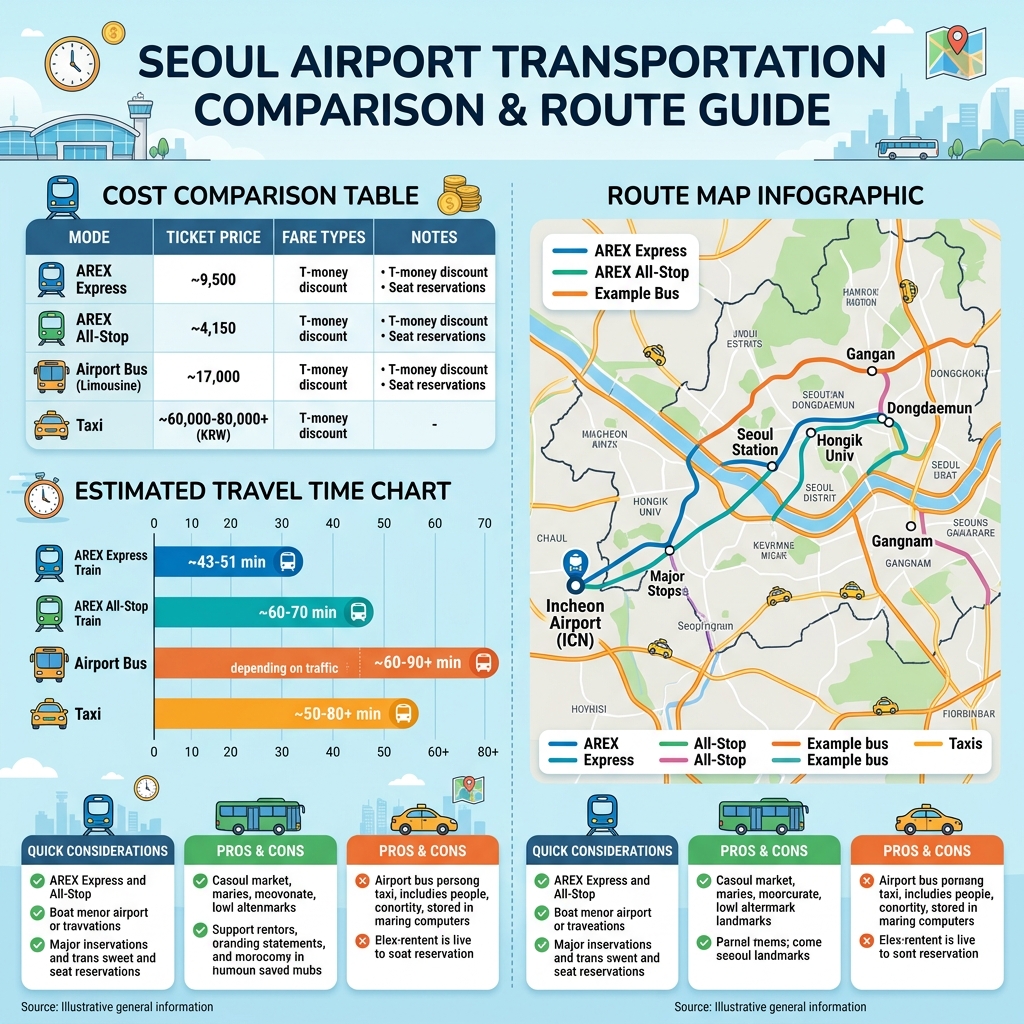
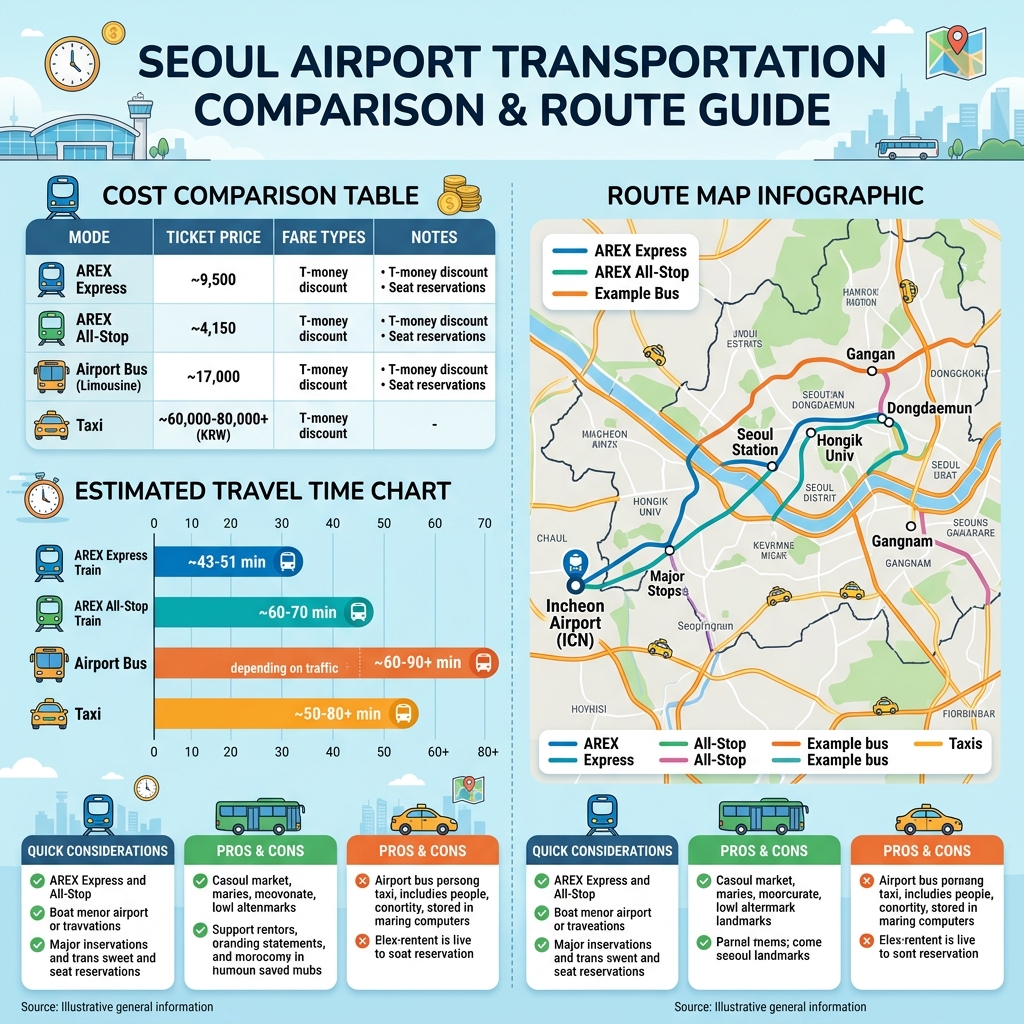
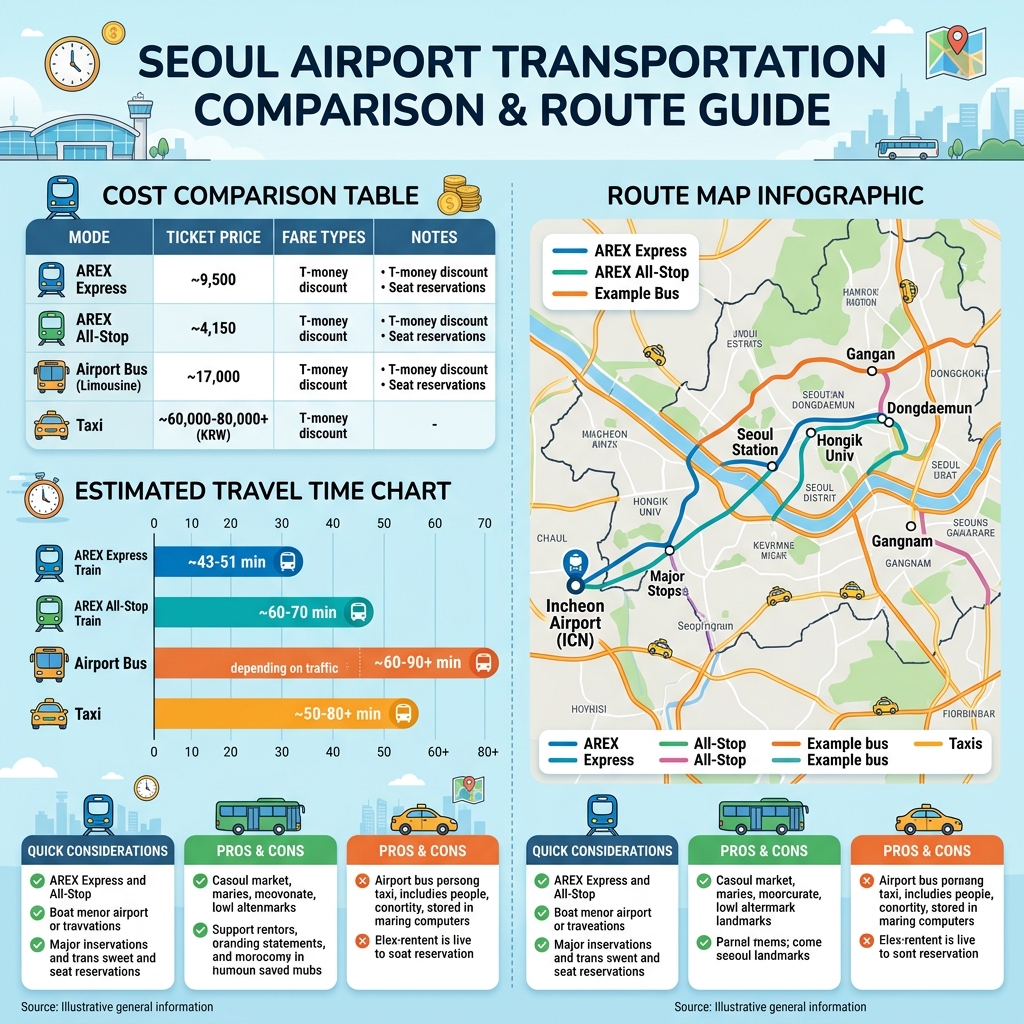
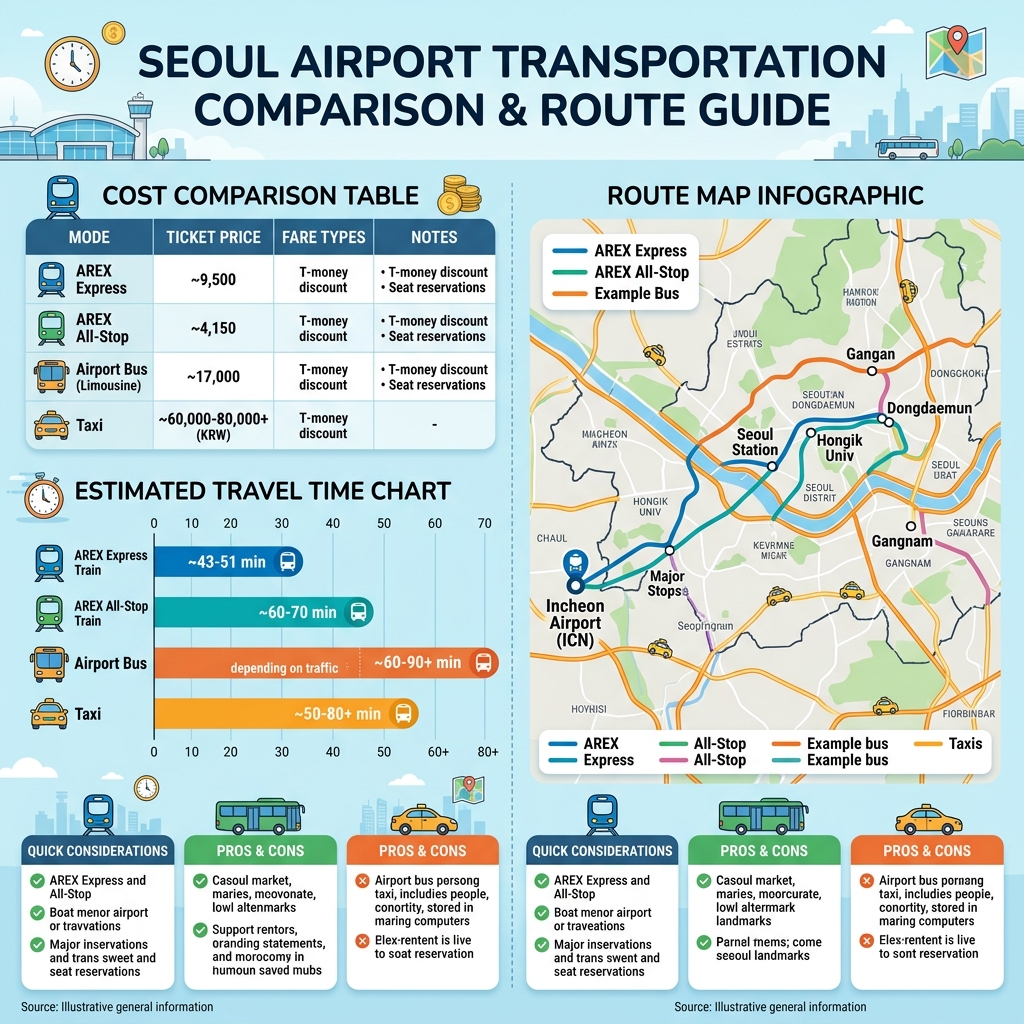
Landing at Incheon International Airport past 22:30 triggers immediate logistical pressure. Many incoming international travelers operate under the assumption that the fast Airport Railroad (AREX) runs continuous trains throughout the night to accommodate late arrivals. This is a critical misconception. The final premium AREX Express Train drops its iron gates at exactly 22:50, and the humble All-Stop commuter rail completes its final city-bound run at 23:56 out of Terminal 1. If your baggage collection or immigration line clears past these midnight boundaries, you face an immediate transit void. Worst-Case Scenario Transit Cost Matrix According to automated fare registries and official terminal infrastructure logs, here is the raw financial and time breakdown for your transit alternatives if you miss the final rail departures. Transit Option Alternative Midnight Availability Real Out-of-Pocket Cost (KRW) Real-World Passenger Friction Point ...

Hongdae Noise Zones: The Exact Street Blocks Where Club Bass Will Keep You Awake Until 5 AM

Image
Booking a trendy guest house or boutique room inside the youth fashion core of Hongdae is highly desirable for travelers seeking immediate access to street performances and nightlife. However, this commercial energy introduces a critical environmental friction point: extreme ambient sound leakage. Dozens of budget accommodations in this district occupy old building shells that completely lack modern acoustic insulation. Selecting a room inside the primary club blocks guarantees heavy subwoofers vibrating your walls for hours until 5:00 AM. Mapping the Critical Decibel Bottlenecks According to local municipal noise complaints and transit logs, Hongdae’s late-night audio footprint concentrates heavily around specific street arteries. [Hongik Univ. Station Exits 1 & 2] === (QUIET FLAT ZONE) ===> Secure Rest [Eoulmadang-ro / Club Street] ====== (EXTREME NOISE ZONE) ===> Subwoofers until 5 AM If you value your sleep quality, avoid booking accommodations located direct...

How to Withdraw Cash in South Korea: A Visual Guide to Finding 'Global ATMs' That Accept Foreign Cards

Image
While South Korea’s gridded retail zones accept card transactions seamlessly, keeping physical paper currency inside your travel pouch remains mandatory for specific arrival steps. You will require physical Korean Won bills to reload basic T-Money transit chips at subway kiosks, buy street food at historical markets, and pay for lockers at public train depots. However, marching up to the very first cash machine you see on a street corner can lead to sudden card rejections and predatory service charges. To protect your travel assets, you must understand how to separate local domestic machines from international-friendly networks. The Convenience Store ATM Trap: High Fees and Low Limits The most common financial mistake international tourists execute is utilizing standalone ATM units installed inside convenience store chains like CU, GS25, or 7-Eleven. These independent machines are operated by private third-party billing networks (such as HanNet or Cyber Cash) rather than establi...