Seoul Medical Travel Stay Cost: Hotel Location & Transportation (2026)
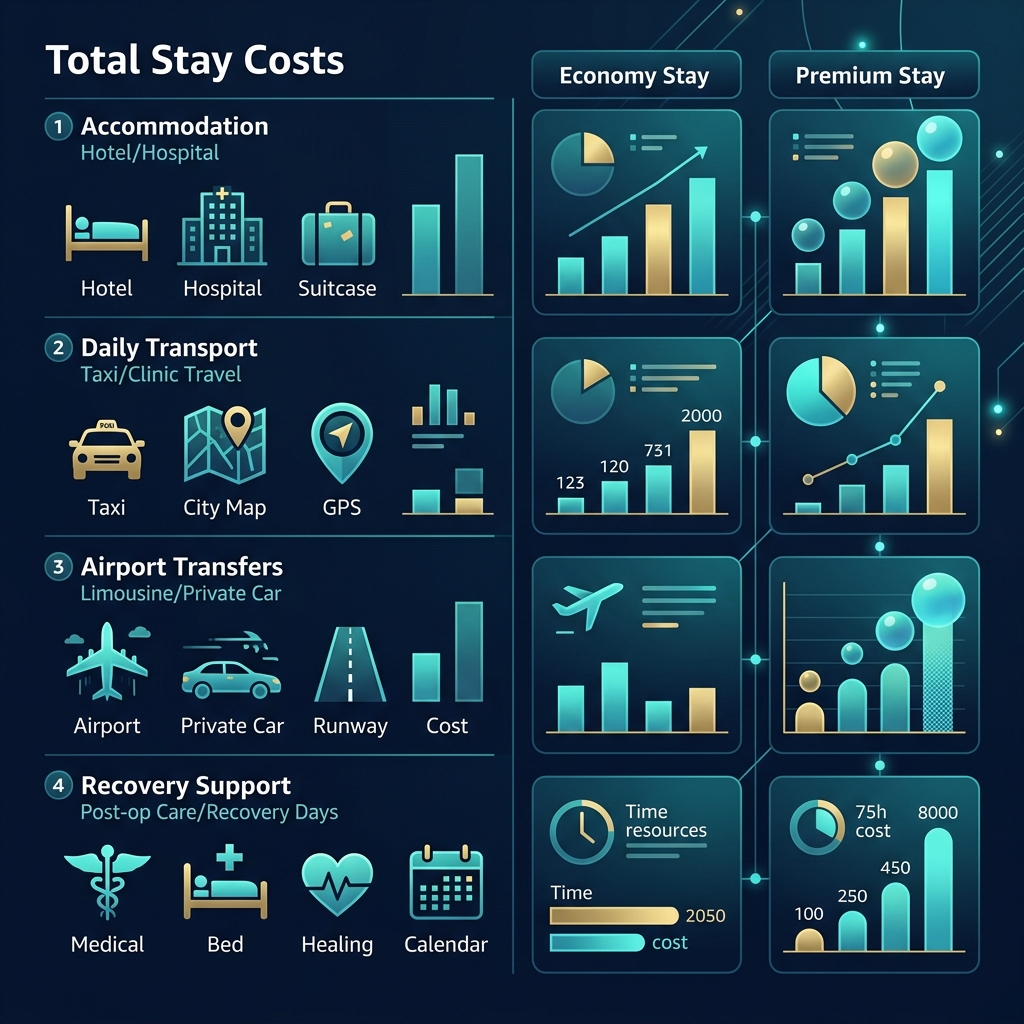
Seoul Medical Travel Stay Cost: Hotel Location and Transportation Factors
1. Total Stay Cost Formula: The Hidden Cost of Low-Grade Distant Lodging
A common budgeting mistake among medical and skincare travelers to Seoul is choosing a hotel strictly based on the lowest nightly room rate. Securing a budget-friendly boutique room in Mapo, Yongsan, or Dongdaemun to save $25 per night often creates a false economy. Traveling across the city for multiple morning clinic appointments, dressing changes, and return airport transit incurs substantial daily taxi fares and physical exhaustion. A comprehensive stay cost analysis follows this framework:
Actual Stay Cost = (Nightly Hotel Rate × Number of Nights) + Daily Clinic Taxis + Airport Transfer Tariffs + Lost Recovery Energy
For neighborhood evaluation criteria and recovery amenities, review our companion guide: How to Choose a Seoul Hotel After Medical or Dermatology Treatment.
2. Total Stay Cost Comparison: Clinic Corridor vs. Distant District
| Lodging Strategy (5-Night Stay) | Avg Nightly Rate | 5-Day Clinic Taxi Cost | Airport Round-Trip Transit | Estimated Total Stay Expenditure |
|---|---|---|---|---|
| Gangnam Clinic Corridor Hotel (Walking distance to clinics) |
$140 / night ($700 total) |
$0 (Flat 3-5 min sidewalk walk) |
$26 – $85 (Airport Bus 6703 or Private Van) |
$726 – $785 USD (Zero transit fatigue; maximum rest) |
| Distant Budget Hotel (e.g., Hongdae / Sinchon) |
$105 / night ($525 total) |
$160 – $220 (Round-trip peak-hour taxis × 4 days) |
$15 – $75 (AREX train or Taxi) |
$700 – $820 USD (Higher or equal cost; high travel strain) |
| Seoul Station Business Hotel (Transit-first strategy) |
$130 / night ($650 total) |
$80 – $120 (Subway Line 4/taxi blend) |
$19.00 (AREX Express round-trip) |
$749 – $789 USD (Fastest airport exit; moderate clinic transit) |
3. Why Daily Transit Friction Increases Post-Treatment Expenses
- Peak-Hour Taxi Surge & Gridlock: Crossing the Han River from northern Seoul into Gangnam during morning peak hours (08:00–10:00 AM) routinely takes 45 to 60 minutes in congested traffic, driving metered fares to $25 to $35 each way.
- Post-Procedure Transit Reluctance: Patients experiencing temporary facial redness or swelling after laser procedures universally avoid public subways, relying exclusively on on-demand taxis that rapidly erode initial hotel room savings.
- Checkout Timing Flexibility: Staying near your clinic allows you to schedule late checkouts or leave bags at the hotel desk while attending final morning clearance appointments without cross-city travel stress.
4. Decision Intelligence Summary
When traveling for medical or skincare appointments, paying a modest nightly premium to stay directly in the Gangnam or Sinsa clinic corridor represents superior economic and physical value. The elimination of daily cross-city taxi fares offsets higher room rates while safeguarding your recovery environment.
Medical Travel Recovery Travel Essentials
Equip yourself with practical accessories designed for in-room recovery privacy and health organization.
- Moisture-Proof Pill Organizer: Compact container for sorting daily prescription vitamins and tablets.
- Portable Door Lock: Heavy-duty secondary lock mechanism ensuring complete room privacy during recovery stays.
- Flight Compression Socks: Essential leg wear supporting blood circulation on international flights.
Lodging Cost Benchmark: Check current hotel rates across Gangnam, Sinsa, and central Seoul on Agoda to balance accommodation pricing against your clinic schedule.
Door-to-Door Airport Transfer: Ensure smooth, low-strain transit between Incheon Airport and your recovery hotel by checking private vehicle options on KiwiTaxi.
Travel Essentials Comparison: Compare travel organizers, pillow cases, and recovery accessories on Amazon before departure.
Recommended Intelligence Hubs
💳 Explore KTX rail passes, travel deals & passes on Klook.
Klook Official Partner Link