Seoul Station KTX Transit ROI Analysis 2026
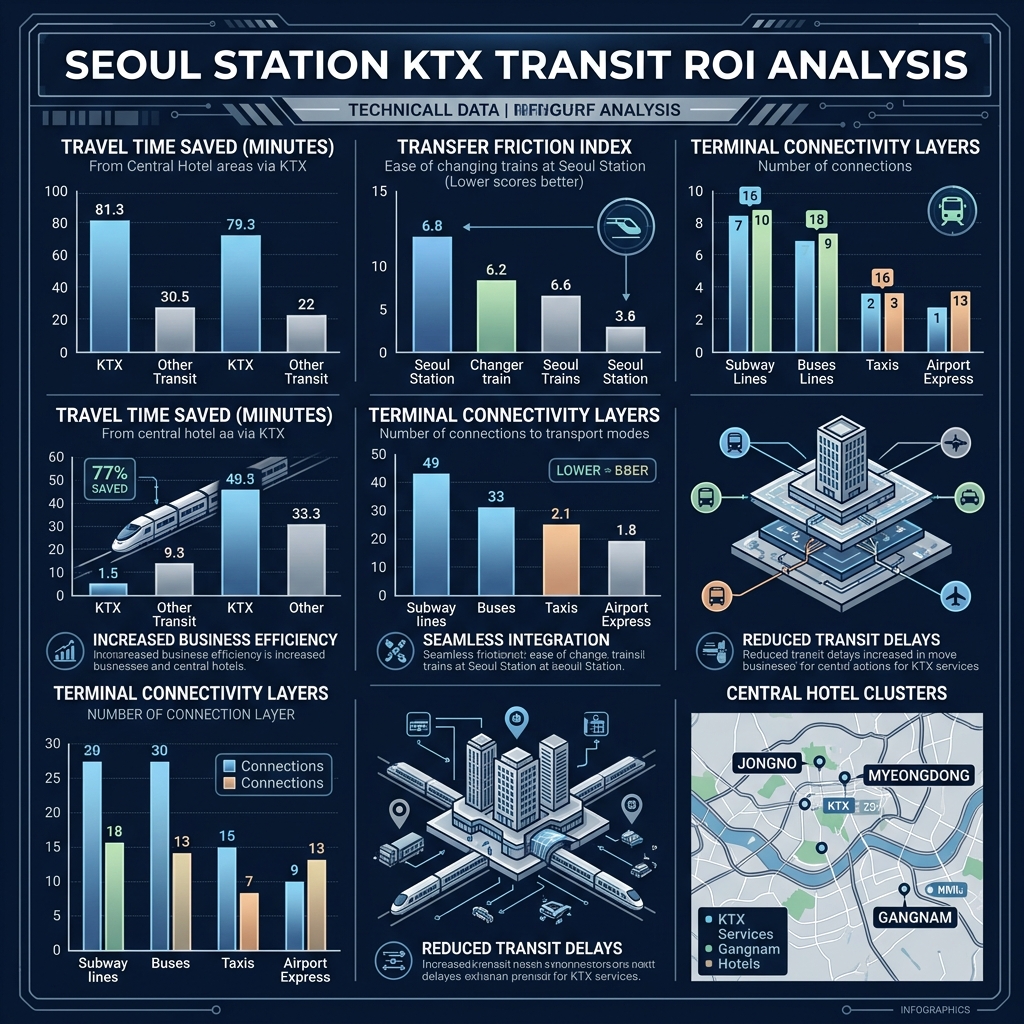
"Formulating an optimal arrival plan for an independent vacation in South Korea requires evaluating more than just the nightly face-value price of an accommodation asset. Discerning travelers must measure the real physical friction index of their transfer routes. Seoul Station functions as a massive, multi-level transport hub spanning seven subterranean stories. Exiting the deep underground train lines with heavy rolling luggage introduces a hidden time and energy cost that directly impacts your day-one exploration capacity. Evaluating these precise operational parameters prevents unexpected budget drainage and optimizes your regional travel timelines."
Formulating an optimal arrival plan for an independent vacation in South Korea requires evaluating more than just the nightly face-value price of an accommodation asset. Discerning travelers must measure the real physical friction index of their transfer routes. Seoul Station functions as a massive, multi-level transport hub spanning seven subterranean stories. Exiting the deep underground train lines with heavy rolling luggage introduces a hidden time and energy cost that directly impacts your day-one exploration capacity.
Evaluating these precise operational parameters prevents unexpected budget drainage and optimizes your regional travel timelines.
Infrastructure Proximity and Transfer Efficiency Matrix
The quantitative data table below isolates the precise physical distance metrics, walking times, and infrastructure parameters for primary hotel assets anchoring the central rail terminal:
| Property Name | Walking Distance from KTX/AREX Gates | Average Transit Time (Minutes) | Underground Tunnel Connectivity | Escalator / Elevator Availability | Physical Friction Rating |
|---|---|---|---|---|---|
| Four Points by Josun | 240 Meters | 3 Mins | 100% Fully Connected | 4 Elevators / 2 Escalators | Ultra-Low |
| Sotetsu The Splaisir | 580 Meters | 6 Mins | Partial (Exit 9 Portal) | Street Ramps / 1 Elevator | Low |
| K-Guesthouse Hub | 420 Meters | 5 Mins | No (Requires Exit 11 Steps) | Manual Stairs Only | Medium-High |
| Standard Station Taxi Bay | 180 Meters | 2 Mins | Internal Escalator Link | 2 Escalators | Low |
Decoupling the Time Deficit of Subterranean Connections
Choosing a hotel that lacks a direct underground link introduces several logistical variables that travelers must log in their cost matrices.
The Surface Level Transit Trap
While a property might claim a short linear distance of "300 meters from the station," that path often assumes you are starting from the surface exit gates. Reaching that surface from the deep non-stop train platforms (located on basement floor B7) requires navigating three long sets of travelators and ticket turnstiles. This internal movement adds exactly 8 to 12 minutes of extra walking time before your group ever touches the outdoor city pavement.
Weather Vulnerability and Sidewalk Conditions
During the peak summer monsoon weeks or winter freeze periods, surface walking with heavy bags scales up your physical strain. Moving through fully connected underground tunnels keeps your group inside climate-controlled zones, protecting your clothing and digital devices from sudden downpours while completely removing the stress of pushing wheels over uneven granite street curbs.
Forced Contextual Internal Link Hub
Once your travel group logs these quantitative walking times and infrastructure friction indicators, matching these numbers to a practical field guide detailing room configurations, room view qualities, and specific booking price points completes your arrival masterplan. Review our verified hospitality field report: Best Seoul Station Hotels with Direct KTX Rail Connections (2026 Guide) to instantly lock in your central accommodation base and protect your travel budget from high peak-season premiums.
Frequently Asked Questions (FAQ)
Q1: Why do different transit apps show conflicting walking paths around Seoul Station?
Global mapping tools often struggle to map vertical multi-floor layouts accurately, frequently routing users out of surface doors instead of utilizing the internal subterranean hallway grids. Relying on local signs inside the station corridors is the most reliable way to navigate.
Q2: What is the exact baseline cost of an AREX Express train ticket walk-up?
The official standard adult tariff for a one-way walk-up ticket at the terminal window is exactly KRW 13,000. However, purchasing a digital confirmation voucher online beforehand drops the cost layer significantly while giving you a direct scannable QR code.
Q3: Are there public luggage lockers available inside the station basements?
Yes. The station houses multiple rows of digital, fingerprint-secured storage lockers spanning sizes from compact daypacks to oversized 29-inch rolling suitcases, charging a sliding fee scale from KRW 3,000 to KRW 8,000 depending on the hour count.
Q4: Does the City Airport Terminal service apply to all international airlines?
No. The specialized in-station check-in service is restricted to passengers flying with primary domestic carriers (such as Korean Air, Asiana Airlines, and Jeju Air) and selected international premium operators. Travelers must verify their airline's status on the official terminal matrix before arrival.
Q5: How late do the underground connecting tunnels remain unlocked?
The main subterranean pedestrian passages linking the railway building to adjacent office towers and hotel entrances drop their automated security grills at exactly 24:00 AM midnight, aligning with the final subway line arrivals.
• Access Real-Time Room Inventories and Member Rates Near Central KTX Rail Terminals with Zero Transfer Fees (Agoda Official Partner Link)
• Pre-Order Non-Stop AREX Airport Train Vouchers Instantly to Lock in Lowest Guaranteed Wholesale Pricing (Klook Official Partner Link)


Comments
Post a Comment