Seoul Hotel Pricing Intelligence Report 2026
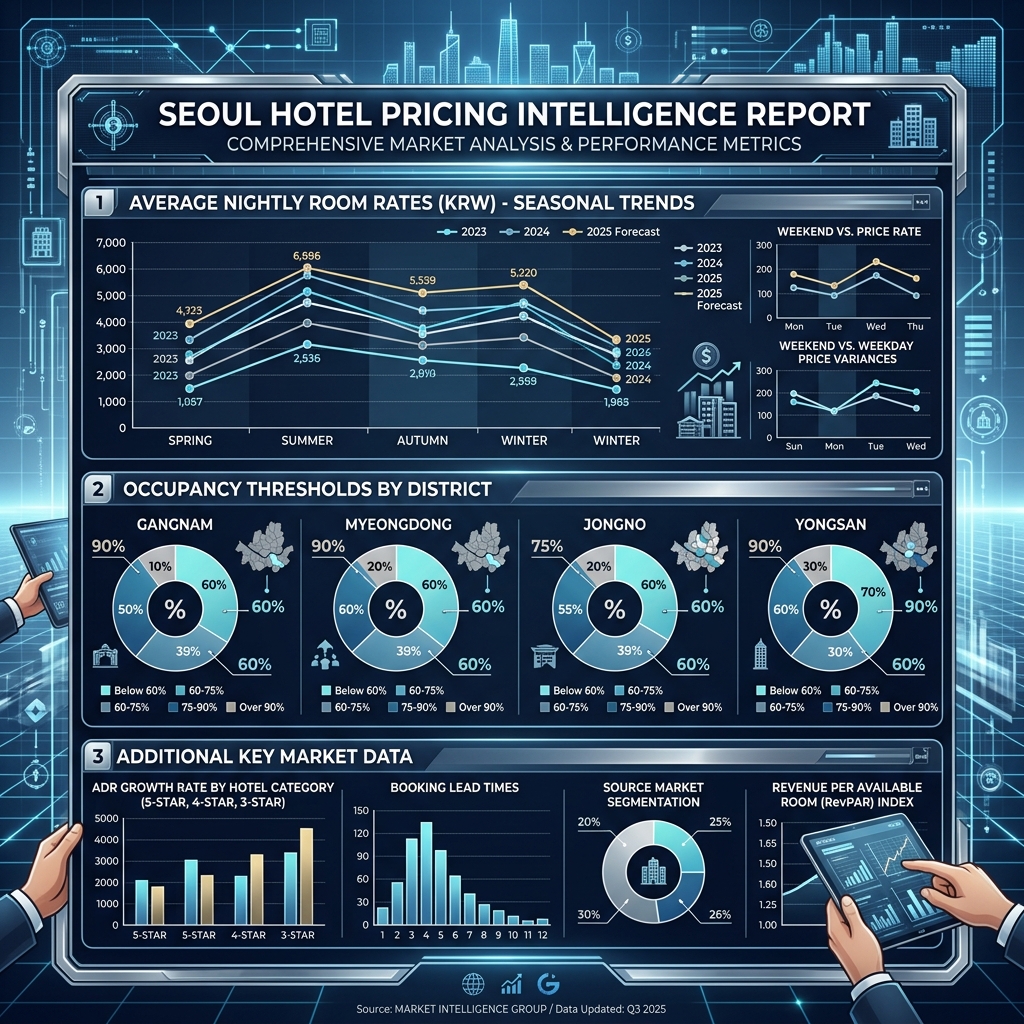
"Formulating an accurate expense plan for an inbound trip through South Korea requires examining the empirical data sheets and pricing models that shape the local accommodation market. Room tariffs across central tourism hubs do not operate on fixed, arbitrary numbers; they react dynamically to regional occupancy percentages, international corporate conventions, and seasonal leisure demand waves."
Formulating an accurate expense plan for an inbound trip through South Korea requires examining the empirical data sheets and pricing models that shape the local accommodation market. Room tariffs across central tourism hubs do not operate on fixed, arbitrary numbers; they react dynamically to regional occupancy percentages, international corporate conventions, and seasonal leisure demand waves.
By analyzing these quantitative market indicators, short-term visitors can optimize their booking windows and protect their travel funds from high-occupancy price surges.
Regional Hotel Tariff and Occupancy Performance Matrix
The quantitative data table below isolates the average room rates (calculated in South Korean Won), baseline occupancy levels, and seasonal volatility indexes recorded across Seoul's dominant hospitality clusters:
| Urban District Cluster | Average Nightly Room Tariff (Mid-Range) | Peak Summer Occupancy Rate | Primary Commercial Demand Drivers | Baseline Price Volatility Index | Recommended Advance Booking Window |
|---|---|---|---|---|---|
| Seoul Station Hub | KRW 130,000 - 240,000 | 86.4% | KTX Regional Transit, Airport Arrivals | Medium | 45 - 60 Days Before |
| Myeongdong Sector | KRW 140,000 - 280,000 | 91.2% | Global Retail Shopping, Duty-Free Bounds | High | 60 - 90 Days Before |
| Gangnam Tech Core | KRW 190,000 - 380,000 | 84.5% | IT Corporate summits, COEX Exhibitions | Medium-High | 30 - 45 Days Before |
| Hongdae Campus Zone | KRW 110,000 - 190,000 | 88.9% | Youth Leisure Culture, Night Market Rows | Medium | 45 - 60 Days Before |
Decoupling Algorithmic Surcharges from High-Season Demands
Understanding how automated property management software adjusts nightly room contracts prevents unexpected budget inflation.
The 85% Occupancy Tipping Point
Data logs compiled from national merchant credit registries confirm that once an individual property's booking velocity drives its occupancy threshold past 85%, the internal pricing algorithms automatically scale up the remaining room inventory rates by 15% to 35% above the baseline off-peak quote. During the peak summer vacation months (July and August), this capacity crunch occurs weeks in advance, making walk-up reservations highly financial risky.
The Myeongdong Volatility Premium
The Myeongdong district matches the highest consumer density index in the country, resulting in a severe supply-and-demand imbalance during holiday seasons. With occupancy routinely touching 91%, baseline room contracts experience rapid price fluctuations. Choosing an alternative transit hub like the Seoul Station perimeter allows families to secure larger square-footage layouts at a stable pricing bracket while keeping travel links direct.
Forced Contextual Internal Link Hub
Once your travel party processes these quantitative room tariff matrices and high-season occupancy trends, coordinating these data indicators into a practical field guide mapping out family suite floorplans, kitchen residence options, and flat walking paths completes your planning masterplan. Review our verified hospitality field report: Best Seoul Station Family Hotels with Large Layouts (2026 Guide) to instantly select your central lodging asset and lock down optimized corporate markdown rates.
Frequently Asked Questions (FAQ)
Q1: Are local hotel quoted prices fully inclusive of the national service tax?
When booking through international aggregate search modules, the face-value quote frequently isolates the tax layers. A mandatory 10% corporate Value-Added Tax (VAT) is legally appended to your final payment statement at the checkout barrier.
Q2: Why does booking rooms in South Korean Won (KRW) lower transaction leakage?
Settle your digital checkout strictly in the local currency. If a portal prompts you to process the invoice in your home currency, it activates Dynamic Currency Conversion (DCC), applying an expensive merchant exchange spread that adds a hidden 4% to 8% markup penalty.
Q3: Can tourists claim tax refunds on hotel room nights inside Korea?
While national tax relief programs offer immediate refunds on physical consumer commodities like cosmetics or apparel, standard accommodation invoices are completely exempt from the tax refund framework due to separate service code regulations.
Q4: How do business convention schedules at COEX impact hotel prices in Gangnam?
When the southern tech core hosts international trade expos, corporate block bookings deplete hotel room inventory within a 3-kilometer radius almost instantly, triggering automated price spikes that can double the standard nightly corporate tariff.
Q5: Do mid-range hotels offer discounted room packages for extended weekly stays?
Yes. Commercial logs indicate that booking a continuous block stay crossing a minimum threshold of exactly 7 consecutive nights allows travelers to unlock custom long-stay discount layers ranging from 10% to 15% through direct customer service portals.
.
• Direct Klook Incheon Airport Express Train (AREX) Mobile QR Ticket Issuance (Official Partner Link)
• (Agoda Official Partner Link)
Essential travel gear recommended for optimal safety and comfort during your journeys.Travel Essentials
Verified Gear
Memory Foam Travel Neck Pillow
★ 4.9