Real Incheon Airport Transit Cost Comparison: Train vs Bus
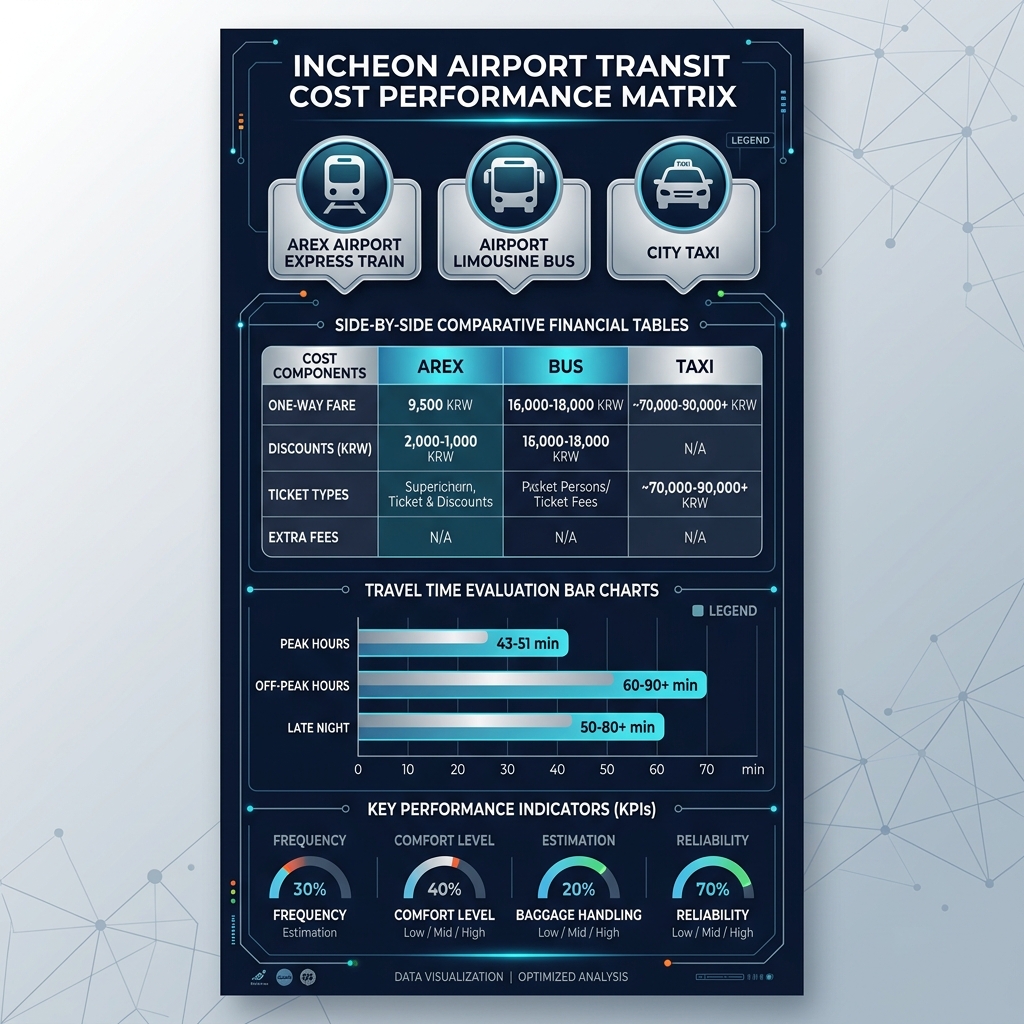
Formulating an optimal logistical strategy from the arrival terminal into downtown Seoul requires analyzing more than raw face-value ticket prices. Independent travelers frequently select a transportation instrument based entirely on baseline quotes, completely overlooking the secondary costs of transport time deficits, intermediate transfer friction, and the cumulative impact of party size multipliers. Moving heavy checked bags across public grids introduces a hidden transit cost that alters your net daily efficiency.
Based on empirical logistics logs compiled across municipal transport networks, this report isolates the exact financial and efficiency tradeoffs enforced across the three dominant terminal transfer channels. Evaluating these performance parameters protects your travel fund from unexpected transaction leakage.
Airport Ground Transportation Cost and Performance Matrix
The quantitative data table below maps the core operational expenditures and time variables verified across primary transit systems for 2026:
| Selected Ground Transit Option | One-Way Adult Tariff (KRW) | Travel Duration (Normal Traffic) | Subterranean Transfer Friction | Luggage Management Strain Index | Target Group Headcount ROI |
|---|---|---|---|---|---|
| AREX Non-Stop Express | KRW 13,000 | 43 Minutes (Fixed) | High (Deep Sub-Floor Stations) | Medium (Elevator Navigation) | Solo Independent Travelers |
| Deluxe Airport Bus | KRW 17,000 | 65 - 80 Minutes | 0% (Direct Surface Curb) | Ultra-Low (Staff Stowed Cargo) | 1 - 2 Passengers (High Comfort) |
| Standard Metered City Taxi | KRW 55,000 - 68,000 | 50 - 65 Minutes | 0% (Direct Hotel Lobby Drop) | Low (Trunk Stowage) | 3 - 4 Passengers (Maximum ROI) |
Computing the Real-Time ROI: Upfront Tariffs vs. Physical Friction
The financial math governing your transportation choice shifts dramatically based on the headcount of your travel party.
The Solo Passenger Subterranean Tradeoff
For solo independent tourists or traveling couples, the AREX rail line delivers the lowest upfront ticket cost and fastest travel speed over isolated tracks. However, its major operational limitation is vertical station friction. The rail platforms are situated deep within basement grids, forcing travelers to drag heavy bags across multiple escalators and long station corridors. The airport bus commands a slight premium but routes directly along surface avenues, dropping passengers off at hotel doorsteps with zero mid-journey transfers.
The Group Tipping Point Formula
As your individual passenger count crosses the threshold to 3 or 4 individuals, the private metered taxi options completely alter the financial layout. Splitting a standard taxi meter among four separate passengers matches the cumulative cost of separate airport bus tickets. In this scenario, the taxi's direct door-to-door lobby delivery yields a superior convenience ROI by completely removing the secondary walking effort from the curb to your check-in desk, making it the most mathematically efficient selection.
Recommended Booking Partners
☞ Korea Travel Intelligence Hub
☞ Related Guide: Best Hongdae Hotels with Direct Incheon Airport Access
☞ View Pre-Verified Express AREX and Airport Limousine Passes in Comment Section below


Comments
Post a Comment