Latest AREX vs Airport Bus Seoul Transit Cost Comparison
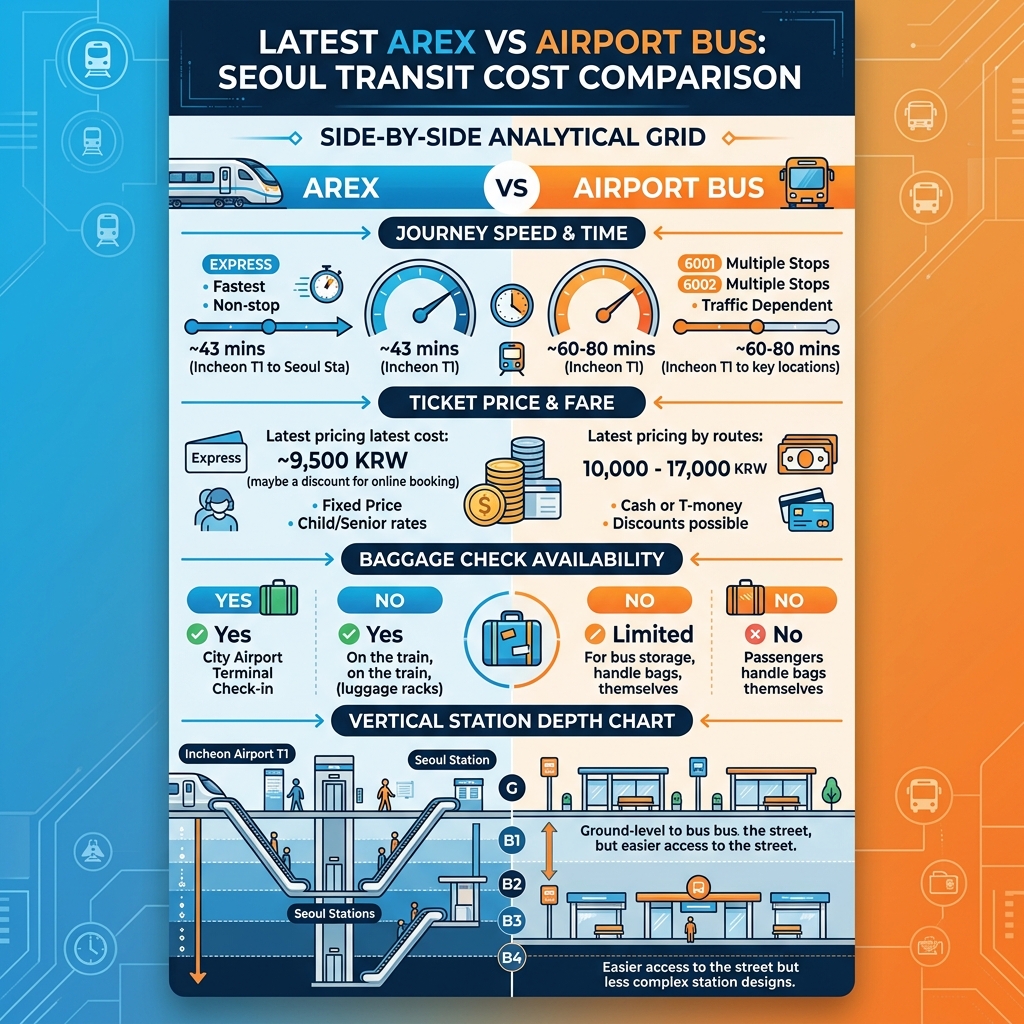
Formulating an accurate budget plan for your departure window requires analyzing the empirical performance metrics and schedule rigidity that govern central transit channels. The choice between boarding the non-stop subterranean train versus utilizing the surface deluxe coach introduces significant variables across travel durations, luggage handling friction, and localized routing flexibility. Selecting your transport instrument without checking official operation sheets can result in missed check-in curfews.
This technical comparison report maps the precise operational expenditures and timeline scores verified across the two primary airport transit instruments anchoring the central core for 2026, protecting your vacation capital from arrival day stress.
AREX Express vs. Airport Bus Performance Metrics
The quantitative data table below isolates the core logistical indicators verified across both primary transit networks:
| Logistical Evaluation Parameters | AREX Non-Stop Express Train Line | Deluxe Curbside Airport Bus Network | Net Functional ROI Performance Winner |
|---|---|---|---|
| One-Way Ticket Cost (Per Adult) | KRW 13,000 | KRW 17,000 | AREX rail delivers a 23% cash saving |
| Net Journey Speed (To Terminal 1) | 43 Minutes (100% Fixed) | 65 - 85 Minutes (Variable) | AREX completely bypasses highway traffic |
| City Terminal Baggage Drop Utility | Available Fully Integrated (B2 Floor) | Completely Absent | AREX unlocks hands-free city check-in |
| Vertical Station Transfer Friction | High (Requires Basement Descent) | 0% (Direct Surface Avenue Boarding) | Airport Bus eliminates stair navigation |
| Departure Dispatch Frequency | Every 40 Minutes | Every 15 - 25 Minutes | Airport Bus tracks higher asset frequency |
Decoupling Schedule Rigidity from Physical Luggage Friction
Understanding the operational boundaries of each transit network prevents unexpected travel delays during peak holiday seasons.
The Isolated Track Speed Advantage
The AREX non-stop express train functions as a precision transit instrument, cutting straight from the station basements to the airport terminals over isolated tracks. Because its operation is completely decoupled from surface highway gridlocks, it guarantees a fixed 43-minute journey speed. Furthermore, it hosts the City Airport Terminal on basement floor B2, allowing passengers to check their heavy bags and clear exit immigration right inside the station building three hours before flight takeoff.
The Surface Comfort Alternative
The Airport Bus network commands a slight financial premium but excels at reducing physical luggage management strain. Navigating deep station basements via multiple elevators requires significant moving time. The deluxe limousine coaches pull up directly at surface avenue curbs, allowing travelers to hand their heavy 25kg suitcases to the curbside crew and board immediately. For family groups looking to avoid vertical station stairs entirely, the surface coach delivers an outstanding comfort return on investment.
Recommended Booking Partners
☞ Korea Travel Intelligence Hub
☞ Related Guide: Best Seoul Station Hotels for Quick Airport Connections
☞ View Pre-Verified Express AREX and Airport Limousine Passes in Comment Section below


Comments
Post a Comment