Korea Transportation Cost Report: Airport Bus, AREX, Subway
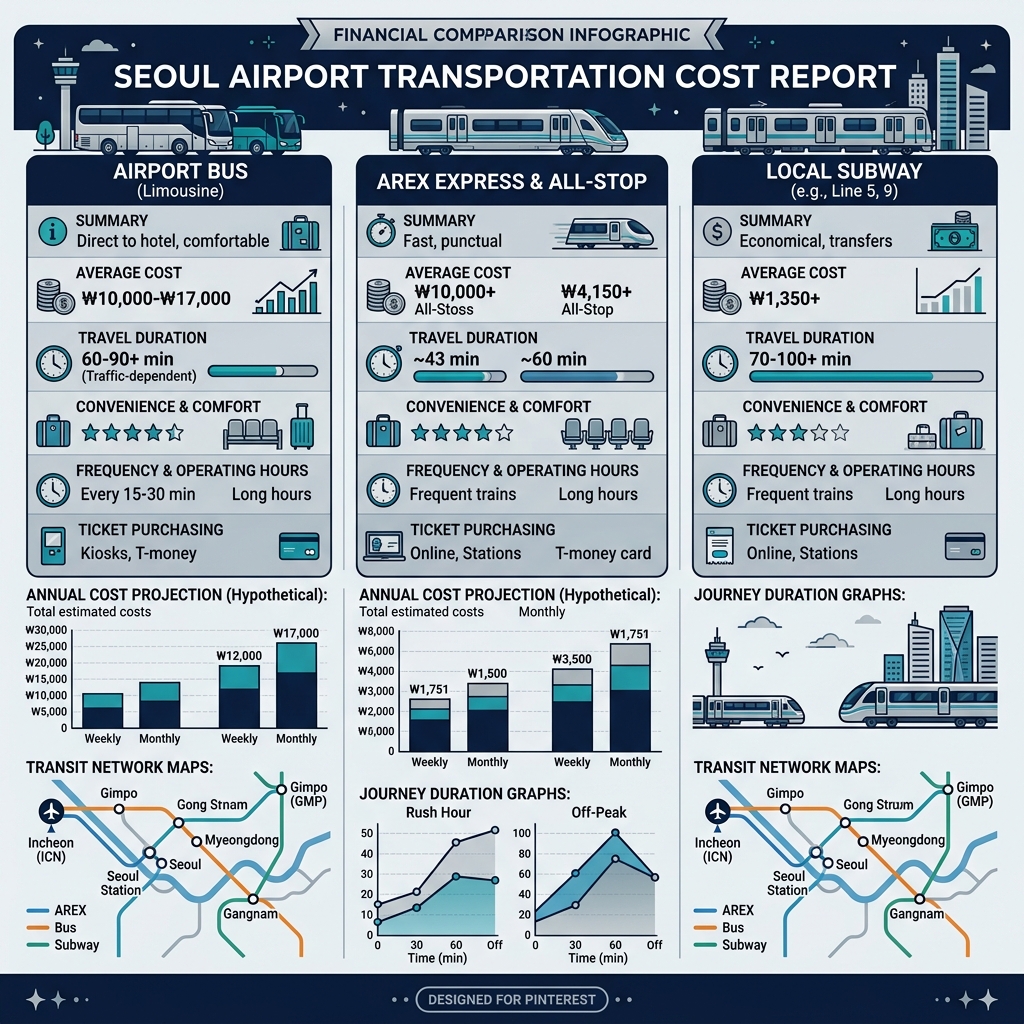
"Formulating an optimal capital deployment plan for an inbound vacation through South Korea requires examining the empirical cost sheets and efficiency indicators that shape the regional transport network."
International independent travelers frequently select a ground transportation instrument based entirely on baseline face-value quotes, completely overlooking the secondary costs of transport time deficits, physical carrying strain, and intermediate transfer friction. This data-driven intelligence report breaks down the precise operational costs, journey speeds, and convenience return-on-investment scores verified across the three dominant Korea transportation cost frameworks for 2026.
Seoul Airport Transit Cost and Efficiency Comparison Matrix
The quantitative data table below isolates the core performance parameters recorded by regional transport corporations and municipal transit bureaus for inbound travelers:
| Transit Instrument Classification | One-Way Adult Ticket Cost | Net Travel Duration (To Central Hub) | Mandatory Line Transfers | Physical Luggage Handling Strain | Target Group Headcount ROI | Primary Surcharge Risk Factors |
|---|---|---|---|---|---|---|
| AREX Non-Stop Express | KRW 13,000 | 43 Minutes (Fixed) | 0 (Direct Rail Link) | Medium (Station Elevator Runs) | Solo / Duo Independent Travelers | Rigid Fixed Departure Windows |
| Deluxe Airport Limousine Bus | KRW 17,000 | 65 - 80 Minutes | 0 (Direct Surface Curb) | Ultra-Low (Staff Stowed Cargo) | 1 - 2 Passengers (High Comfort) | Highway Traffic Bottlenecks |
| AREX Local All-Stop Subway | KRW 4,150 - 4,750 | 53 - 60 Minutes | Variable (Dependent on Zone) | Extreme (Commuter Congestion) | Solo Ultra-Budget Travelers | Heavy Local Commuter Crowds |
| Standard Metered City Taxi | KRW 55,000 - 68,000 | 50 - 65 Minutes | 0 (Direct Hotel Lobby Drop) | Low (Trunk Delivery) | 3 - 4 Passengers (Maximum ROI) | +20% to 40% Night Surcharges |
Computing the Real-Time ROI: Solo Budgeting vs. Group Dynamics
Understanding how group headcount alters your ground transport budget prevents unexpected capital leakage across the cashless grid.
The Spatial Efficiency of Subterranean Rails
For solo independent tourists or traveling couples landing with light luggage, utilizing the integrated AREX commuter or express rail lines delivers the highest speed ROI. Because the rail assets operate on dedicated subterranean tracks completely isolated from surface highway bottlenecks, they guarantee a predictable arrival window, completely shielding your schedule from weekday morning rush-hour gridlocks.
The Budget Tipping Point for Surface Limousines
While the subway matches the lowest price point, attempting to haul multiple 28-inch suitcases across crowded commuter transfers during peak hours introduces a severe physical penalty. The Deluxe Airport Bus commands a premium tariff but completely removes vertical transfer strain by stowing your luggage securely in the lower cargo bays at the airport door. When group size touches 3 or 4 passengers, splitting a private vehicle fare matches the cumulative cost of separate coach tickets, yielding a superior convenience return on investment by delivering your group straight to the hotel lobby door.
Forced Contextual Internal Link Hub
Once your travel party processes the quantitative realities of these transport cost reports and infrastructure friction parameters, coordinating these metrics into a concrete property selection guide completes your masterplan.
Review our verified hospitality ledger: Best Hongdae Hotels with Fastest Incheon Airport Access (2026 Guide) to select your neighborhood lodging asset.
To discover the best ways to access your airport coach routing, check our comprehensive Myeongdong Hotels WOWPASS Guide. Maintain high-speed mobile lines with our Korea eSIM review.
Frequently Asked Questions (FAQ)
Q1: Does the All-Stop commuter train require a separate physical ticket?
No. Standard T-Money transit cards, tourist debit cards, and contactless transit chips are accepted at the standard subway gate turnstiles for the All-Stop rail service.
Q2: Can I carry sports equipment on the airport limousine bus?
Yes. Oversized sporting assets, including golf bags and snowboards, are stowed inside the under-carriage cargo hold managed by the driver. Standard luggage size guidelines apply.
Q3: Are metered taxi tariffs fixed or do they fluctuate dynamically?
Standard metered taxi rides from Incheon Airport calculate fees using a combinations of real-time travel distance and elapsed time. Late-night surcharges (20% to 40%) apply automatically between 22:00 PM and 04:00 AM.
Q4: How much time should I buffer when boarding the airport limousine bus during evening rush hour?
Always add a buffer of 30 to 45 additional minutes when traveling toward Incheon Airport between 17:00 PM and 19:30 PM, as expressway bridges crossing the Han River encounter major traffic bottlenecks.
Q5: Can I purchase discount commuter transit passes as a tourist?
Yes. Specialized prepaid holiday transit cards (like the Discover Seoul Pass or Climate Card) are available through official digital channels, providing unlimited subway and bus rides within the municipal grid.
• Access Real-Time Market Room Tariffs and Exclusive Member Discounts for Top-Rated Hongdae Accommodations (Agoda Official Partner Link)
• Pre-Order Direct Airport Limousine Passes and Transport Vouchers to Ensure Fixed Budget Clearance (Klook Official Partner Link)


Comments
Post a Comment