Seoul Subway Fare Calculator: Distance-Based Pricing Explained
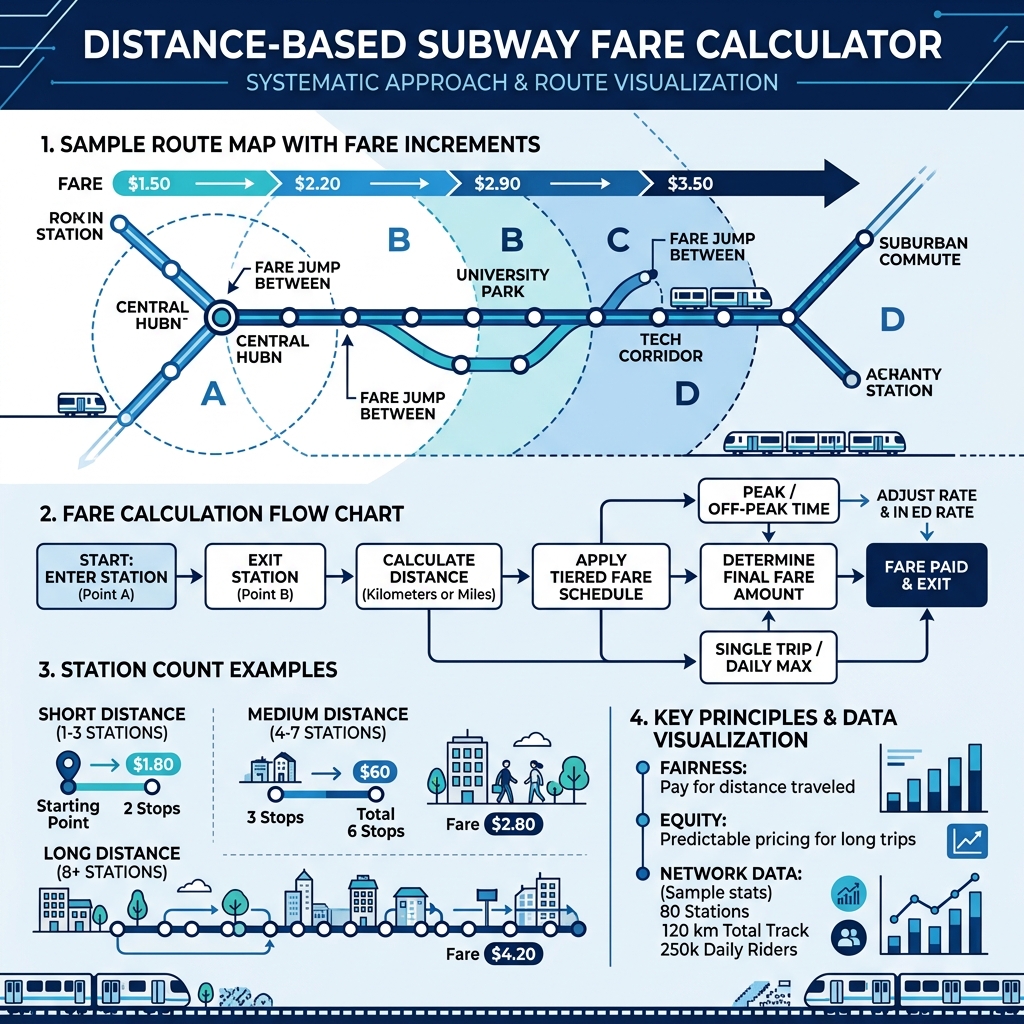
"Formulating a precise financial log for your movements through South Korea requires analyzing the automated distance calculator rules enforced across the subway lines. Unlike cities that utilize flat-rate single zone ticketing, the Seoul metropolitan subway operates on a strict distance-proportional tariff framework. The system software computes the precise geographic displacement between your entry turnstile and exit gate to define the final fare deduct log."
Technical Operations of Distance-Based Charging
Formulating a precise financial log for your movements through South Korea requires analyzing the automated distance calculator rules enforced across the subway lines. Unlike cities that utilize flat-rate single zone ticketing, the Seoul metropolitan subway operates on a strict distance-proportional tariff framework. The system software computes the precise geographic displacement between your entry turnstile and exit gate to define the final fare deduct log.
Based on official structural archives from the Seoul Metro Authority, tracking these specific mileage thresholds removes common pricing confusion for international visitors.
The 10-Kilometer Baseline Boundary
The initial baseline charge covers all movements executed within a fixed geographical distance of 10 kilometers. Tapping your transportation card through the entry turnstiles commits the base rate of exactly 1,550 KRW (approx. $1.15) to the transaction log, allowing you to ride up to 10 kilometers without triggering any incremental surcharges.
Mid-Range Increments up to 50 Kilometers
Once your train path crosses the primary 10-kilometer boundary line, the distance calculator transitions into its secondary processing phase. The system applies an automatic surcharge of exactly 100 KRW (approx. $0.07) for every additional 5 kilometers traveled. This incremental pricing rule controls all transit paths extending up to a total length of 50 kilometers.
Long-Distance Fare Calculations and Caps
When a travel itinerary cuts completely across the metropolitan capital region into outlying suburban sectors, the calculation mechanics modify to protect long-distance commuters.
The 8-Kilometer Step System Over 50km
For highly extended journeys that exceed a total tracking length of 50 kilometers, the software scales down the surcharge rate to maximize budget efficiency. Once past the 50km marker, the system appends an additional 100 KRW (approx. $0.07) for every 8 kilometers traveled, slowing down the price accumulation curve across long provincial lines.
Inter-Provincial Capital Region Integration
The distance calculator handles cross-border travel uniformly as you move between Seoul, Gyeonggi Province, and Incheon infrastructure. The unified software grid treats the entire multi-provider layout as a single continuous network rail, ensuring transfer credits remain active even when crossing provincial boundaries.
Practical Routing Scenarios and Expected Costs
Reviewing real-world routing examples maps how the distance-based pricing calculator operates across standard tourist runs.
Short Inner-City Commerce Loops
Myeongdong Station to Hongdae (Hongik Univ. Station): This travel path tracks under the 10-kilometer limit. The total card expenditure logs at exactly the base rate of 1,550 KRW (approx. $1.15) with zero distance add-ons.
Seoul Station to Gangnam Station: This cross-river journey extends past the initial baseline. The distance calculator logs a final deduction of exactly 1,750 KRW (approx. $1.30), factoring in two separate 100 KRW (approx. $0.07) distance increments.
Long-Distance Cross-City Commuter Routes
Seoul Station to Suwon Station (Line 1): This highly extended regional run spans approximately 41 kilometers. The automated calculator appends seven distance blocks onto the base rate, rendering a final card deduction of exactly 2,250 KRW (approx. $1.68).
Closed-Loop Top-Up Limits and Hardware Rules
Interacting with the physical station payment terminals requires adherence to strict local currency handling rules.
Ticket Kiosk Cash Load Restrictions
The automated multi-lingual ticket machines located inside the station lobbies are locked into a closed-loop processing configuration. These terminal units accept physical cash South Korean Won banknotes only for loading fare value onto your T-Money or WOWPASS chips. International credit card networks are systematically blocked at these specific top-up terminals.
Single-Use Ticket Refund Deposits
Travelers utilizing single-use paper ticket templates are subject to an integrated deposit tracking rule. The hardware dispenser collects a mandatory 500 KRW (approx. $0.37) cash deposit per card at checkout. Passing this card into the automated refund slots at your final destination restores the physical 500 KRW (approx. $0.37) banknote immediately, preventing structural capital loss.
Travel Funnel Integration with Local Transit Passes
Balancing your calculated transport mileage metrics against specialized pre-paid travel assets prevents daily budget leaks.
Short-Term Tourist Unlimited Pass Options
For visitors planning high-density sightseeing routines that cross multiple distance zones daily, utilizing short-term unlimited passes—such as the short-term tourist Climate Card—bypasses the distance calculator entirely. Purchasing a 3-day unlimited pass package for exactly 10,000 KRW (approx. $7.45) unlocks unlimited travel within the municipal borders with zero mileage surcharges.
Forced Contextual Internal Link Hub
Once your group completes the math on these distance-proportional mileage parameters, calculating the total real-world card outlays across convenience stores, traditional street food lanes, and transport checkouts completes your financial masterplan. Review our verified baseline monetary analysis: How Much Does a Seoul Subway Trip Really Cost in 2026 to instantly organize your daily cash distribution matrix and eliminate transaction fee penalties entirely.
Frequently Asked Questions (FAQ)
Q1: Does the distance calculator charge extra for switching lines inside a station?
No. Transferring between different subway numbers (such as switching from Line 2 to Line 4) via the designated internal pedestrian walkways preserves your continuous journey log. Surcharges are computed strictly based on total door-to-door distance, not the number of train transfers.
Q2: How many minutes do I have to complete a transfer to a connecting city bus?
The integrated fare network allows exactly 30 minutes to complete a transfer and maintain your discount status. For late-night transit tracking executed between 21:00 PM and 07:00 AM, the system automatically expands this allowance to 60 minutes.
Q3: What happens if my transit card runs out of funds before I pass the exit gate?
If your balance drops below the required distance surcharge level, the exit turnstile will lock and display an error. You must utilize the "Fare Adjustment Machine" positioned immediately inside the gate perimeter to load physical cash Won and clear the balance deficit.
Q4: Does the distance calculator apply to children's transit cards?
Yes, but the increments are scaled proportionally to match the child subsidy tier. While adults accumulate 100 KRW (approx. $0.07) per distance block, child profiles add a scaled increment of exactly 50 KRW (approx. $0.04) per distance block past the 10km boundary line.
Q5: Is the premium Shinbundang line fare calculated purely by distance?
No. The Shinbundang Line operates on a hybrid system. The software applies a flat private infrastructure access fee (up to 1,000 KRW (approx. $0.75)) the instant you pass through its specialized connecting gates, and then appends standard distance-proportional surcharges onto your final exit log.
Official Airport Transit Passes & eSIM Data Vouchers:
Secure your high-speed AREX tickets and data-enabled eSIM profiles online to bypass queue waiting times at terminal gates. Access partner links in the comment section below.
Check live discount AREX ticket options and eSIM data links in the Comment Section below (Official Partner Integration)


🌐 Seoul Subway Ticket Calculator & Airport Passes
ReplyDelete☑️ Pre-book AREX High-Speed Airport Rail Pass: klook.com/activity/130103-wowpass-card-incheon-airport-pickup/?aid=118863
☑️ Browse Seoul Station & Downtown Hotel Deals: agoda.com/partners/partnerlanding.aspx?cid=1966639