Pocket Wi-Fi vs eSIM in South Korea: The Honest Cost and Battery Drain Breakdown for Group Travelers
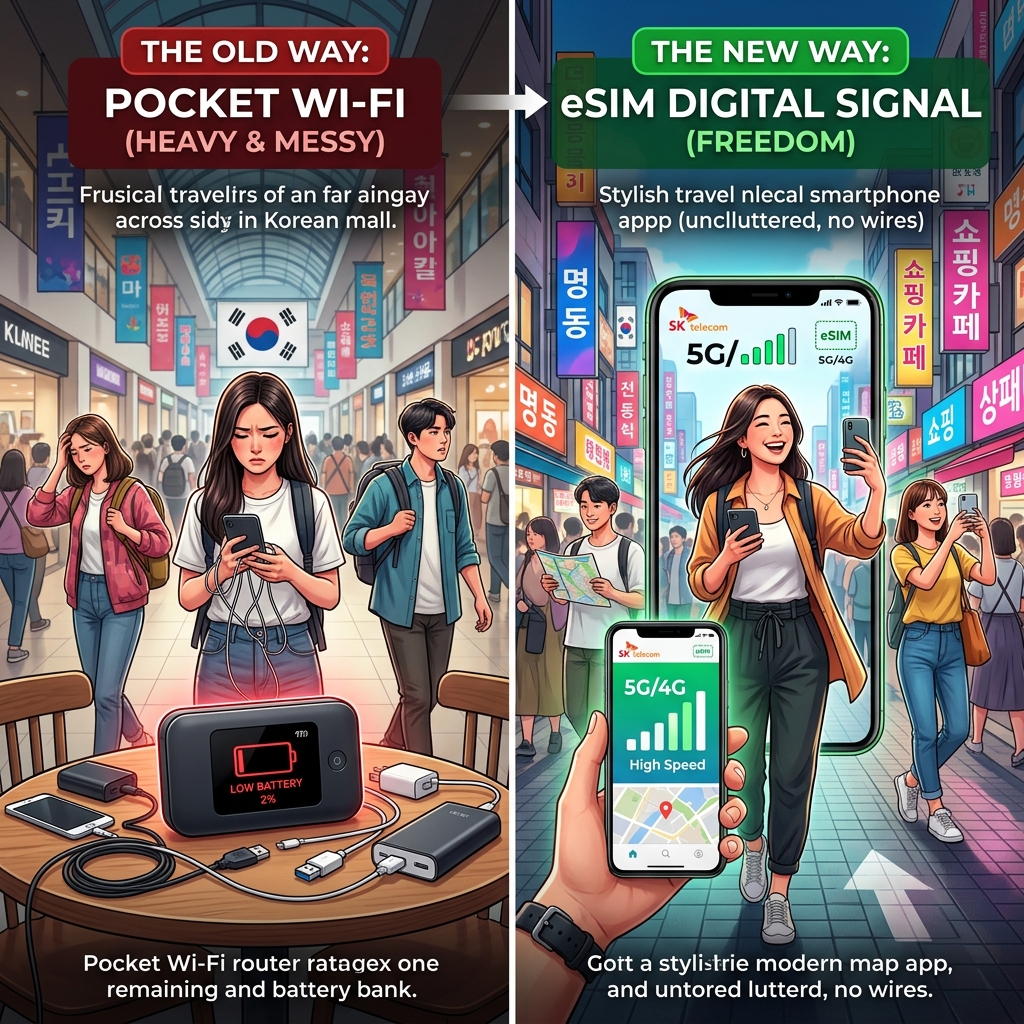
Securing an uninterrupted high-speed data connection upon crossing the border into South Korea is an absolute priority for digital navigation and transport coordination. For families or small groups traveling together, the payment choice usually drops down to two specific methods: renting a shared physical Pocket Wi-Fi router (Egg) or deploying individual travel eSIM profiles.
While marketing brochures emphasize the shared cost benefit of a single Wi-Fi egg, running a realistic look at hardware latency, device return logistics, and daily smartphone battery drain dynamics reveals massive hidden costs.
Pocket Wi-Fi vs. eSIM Performance Matrix
Based on live network data logs and automated device tracking metrics across central Seoul, here is how the two primary connection methods compare under real-world travel loads.
| Connectivity Performance Metric | Physical Pocket Wi-Fi Router (Shared Egg) | Direct Digital Travel eSIM (Individual) |
|---|---|---|
| Average Cost (5-Day Trip for 3 People) | ~$15.00 - $22.00 USD total (Shared) | ~$36.00 USD total ($12.00 per profile) |
| Physical Hardware Overhead | High (Requires carrying an extra electronic brick) | Zero (100% digital software integration) |
| Smartphone Battery Life Impact | Low (Connects via energy-efficient Wi-Fi) | Moderate to High (Continuous cellular tracking) |
| Distance Separation Friction | Extreme (Group must stay within 10 meters of router) | Zero (Every traveler maintains independent data) |
| Airport Return Counter Penalty Traps | High risk of hardware replacement fees if lost | None (Profile deletes automatically upon expiration) |
The Distance Separation Trap: The Splitting Group Crisis
The single biggest practical friction point of renting a single Pocket Wi-Fi device for a small family group is geographic tethering. The physical router projects a functional data bubble stretching roughly 10 meters.
If your group decides to split up inside a massive multi-story retail complex like the COEX Mall—where one person hunts for cosmetics while another explores a bookstore—the connection breaks instantly. The individuals who move away from the central router brick lose all navigation data, translation capabilities, and text messaging functions, turning a simple shopping afternoon into a stressful communication blackout.
The Battery Drain Reality: The Electronic Balancing Act
While utilizing an eSIM causes your smartphone processor to work harder tracking local cellular network switches, deploying a Pocket Wi-Fi router introduces an entirely separate hardware battery crisis.
The Router Lifespan: A standard rented Wi-Fi egg features an active operating battery lifespan of roughly 6 to 8 hours under a multi-device load. If you leave your hotel lobby at 09:00, the device will drain completely by 16:00.
The Friction: To keep your group connected for dinner, you are forced to tether the router to a heavy external power bank inside your daypack, creating an annoying tangle of charging cords and increasing physical weight burdens.
The Airport Return Counter Gauntlet
Renting a physical router means entering a binding hardware contract with terminal carrier counters. When your vacation ends, you must budget an extra twenty minutes ahead of your airline check-in deadline to line up at the arrival booths, return the physical device package, and verify all auxiliary charging adapters are accounted for.
If you accidentally pack the router inside your checked suitcase or forget to return it before clearing border security, the carrier network will automatically bill your linked international credit card a steep replacement penalty ranging from $100 to $150 USD.
The Final Selection Rule
Individual travel eSIM profiles for South Korea currently run approx. 12,000 KRW (approx. $9.00 USD) per profile for a 5-day unlimited plan, while a shared router rental costs approx. 15,000 KRW (approx. $11.00 USD) total for the group. Airport return counter waits add roughly 20 to 30 minutes to your checkout timeline. If your group consists of a budget-focused family with young children who strictly stay glued to your side at all times, the Pocket Wi-Fi route offers functional, low-cost utility. However, if your party includes independent adults or teenagers who intend to explore separate shopping rows or cafe alleys, avoid the physical router completely. Buy individual, direct-routing local eSIM profiles instead to guarantee seamless, independent connection lines without any airport return logistics. To review pre-verified digital connection codes or secure your express airport rail passes ahead of time, Check here to secure your high-speed setup vouchers.
📍 Data sourced from Korail official ticketing matrixes & public data registers.
🎫 Book Official Rail Passes via Klook → Get Discounted Rail Passes (Klook)
🏨 Secure Vetted Hotels via Agoda → Browse Verified Stays (Agoda)
⚡ Full affiliate links & booking codes: ↓ See Comment Section below


🌐 Korea eSIM & Transit Passes
ReplyDelete☑️ [Instant eSIM] Secure pre-verified Korean eSIM profiles or certified transit passes (Klook)
☑️ [Verified Stays] Flat-ground hotels near Seoul subway hubs (Agoda)